









Stainless Steel Stamping with Self-Clinching Nuts
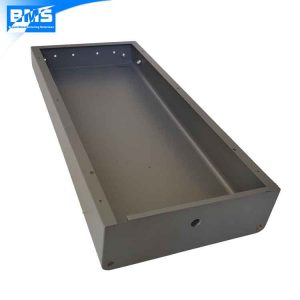
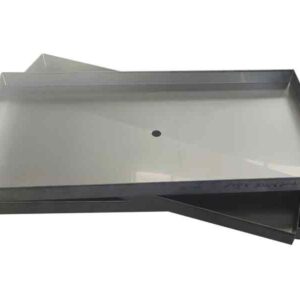
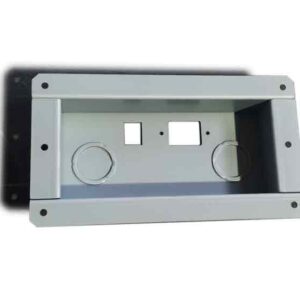
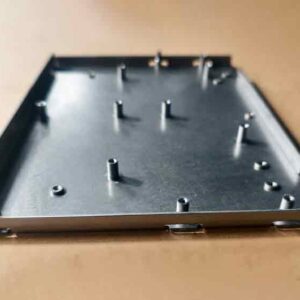
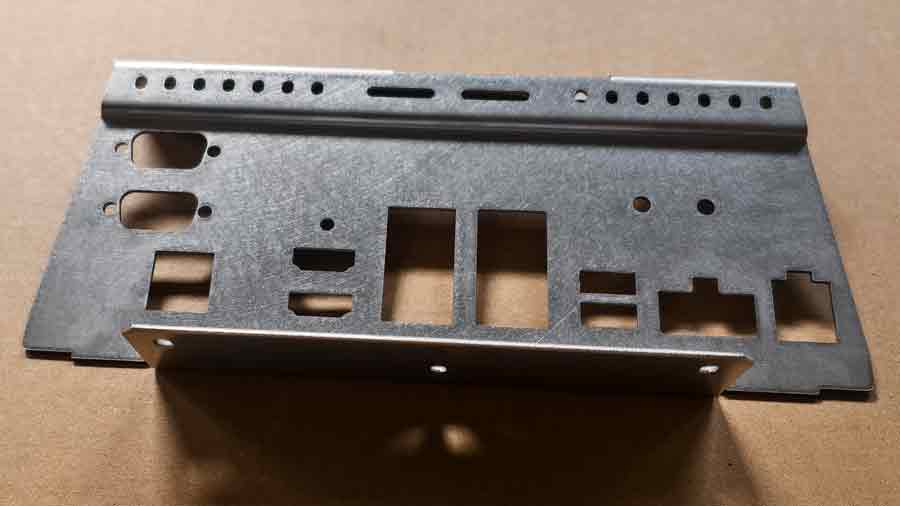
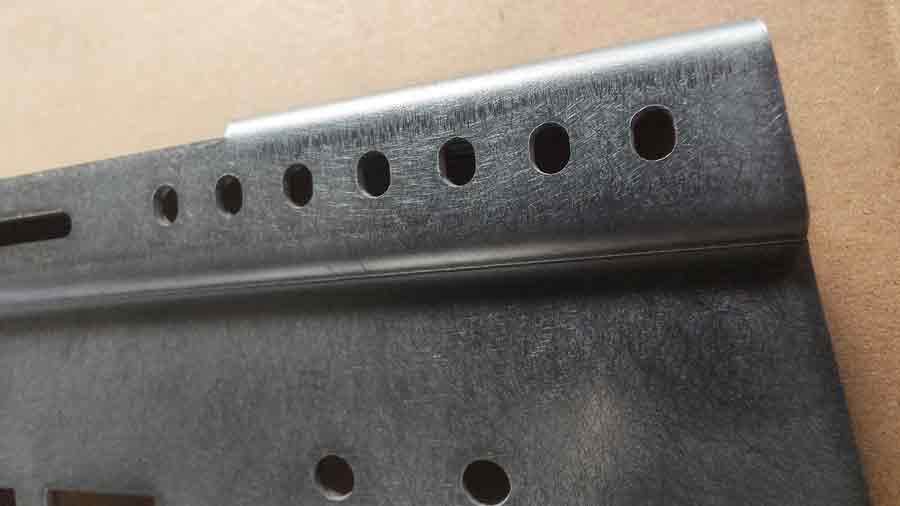
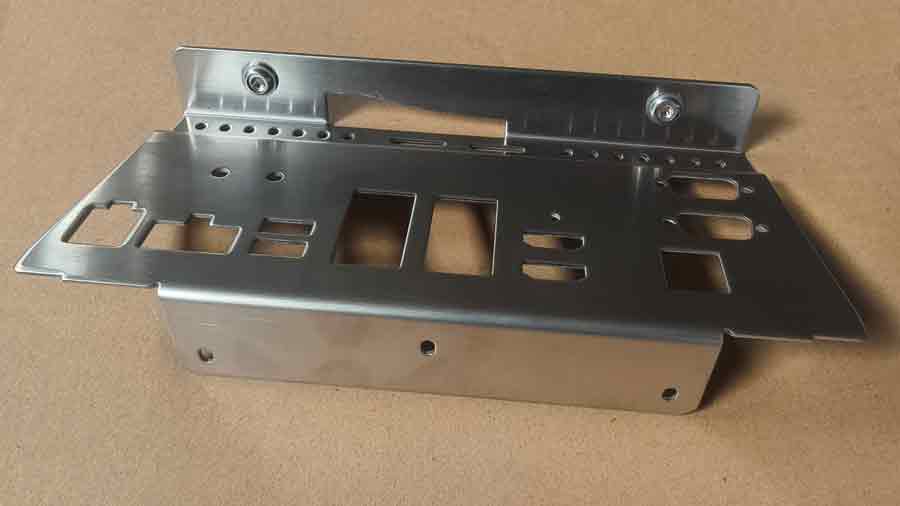
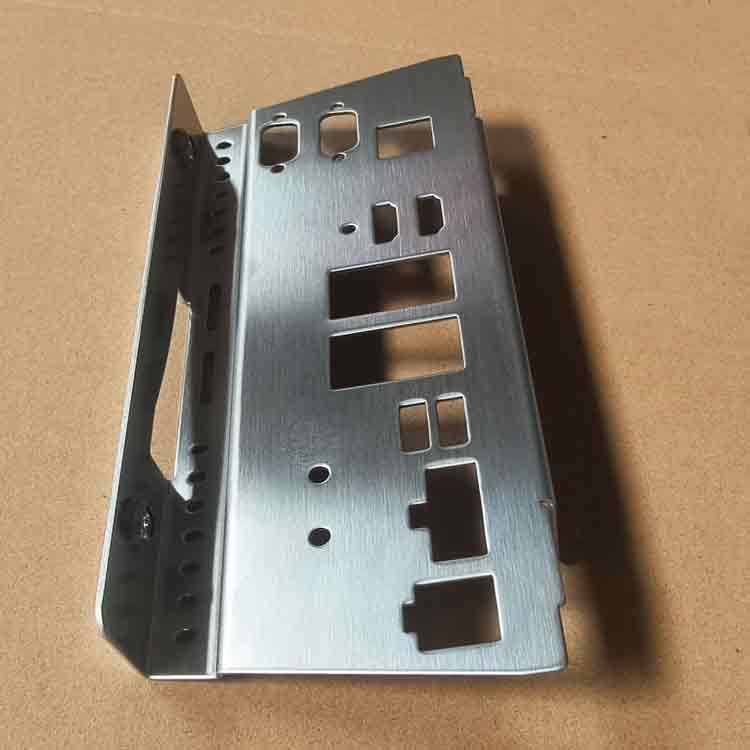
This stainless steel stamping part is designed with high aesthetic standards on one side and includes two floating nut inserts. The base side features multiple bends, achieved through both stamping and press brake processes.
Part specification
-
Dimensions: 230 x 126 x 53 mm
-
Material: 304 Stainless Steel, 1.5 mm thickness
-
Surface Treatment: None
Critical feature
Dimensional Tolerances
-
Hole Tolerance: ±0.02 mm
Two of the holes are designed for press-fitting the floating nut inserts, so high precision is required for these. The other holes mainly accommodate electronic connectors, where slightly lower tolerance is acceptable.
-
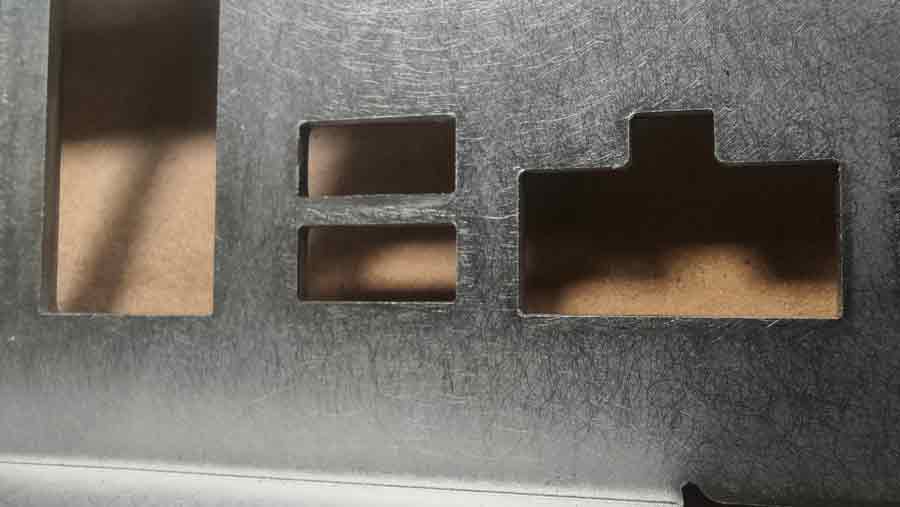
Blanking Tolerance: ±0.05 mm
The blanking process is carried out via stamping instead of laser cutting, which helps reduce costs in mass production due to the high number of holes. Additionally, stamping provides better dimensional accuracy. -
Bending Tolerance: ±0.30 mm
The four edge bends are performed using a press brake, rather than stamping dies. However, one of the Z-shaped bends (which involves two separate bends) is completed through the stamping process.
Material: 304 Stainless Steel, Brushed Finish
The material used for this stamping part is 304 stainless steel, with a No. 4 brushed finish. This finish offers a uniform, linear texture with a soft sheen, making it modern, elegant, and resistant to showing dirt. The brushed surface also helps hide minor scratches, offering both durability and aesthetic appeal.
How to Protect the Surface from Scratches
During the stamping process, it can be difficult to prevent minor scratches if not handled carefully. For this part, one side requires a higher level of aesthetic quality, so protective film is applied during stamping and bending. The film is removed only after the floating nut inserts are installed, helping to prevent most light scratches during manufacturing.
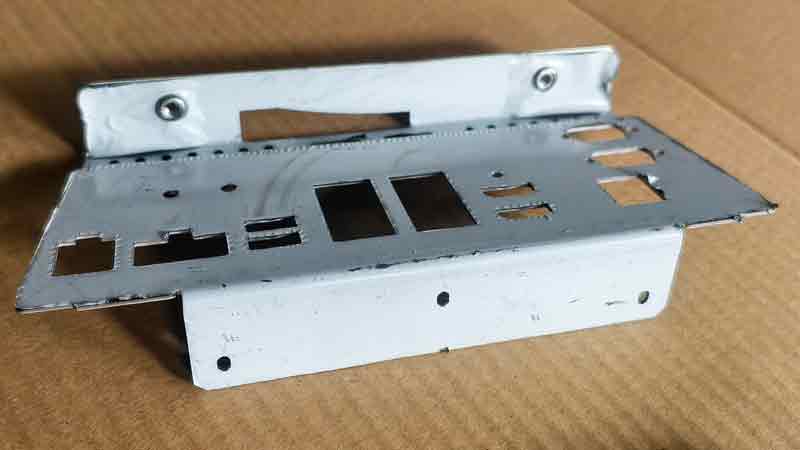
Polished Surface with Random Grain Patterns
On the other side of the part, a polished finish is applied, with random grain patterns. Polishing removes fine burrs that can form on the surface after stamping, particularly on the bottom side. The irregular grain pattern also helps to conceal small scratches, balancing quality with cost-efficiency.
Floating Nut Insert
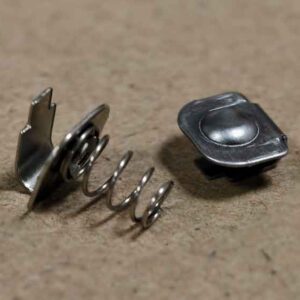
This part features a floating nut insert design, where the threaded portion is able to move slightly within the fixed housing. This flexibility allows for better alignment and tolerance adjustment during installation, making it easier to install and secure bolts. Floating nuts are typically used in applications where fine adjustments or alignment are necessary.
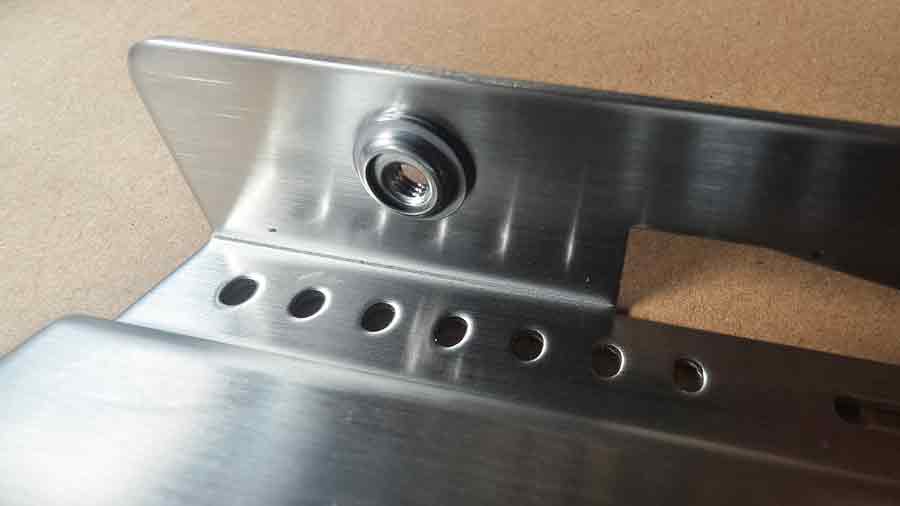


Special Requirements for Floating Nut Insertion
Due to the internal floating feature of the nut, the floating nut insert requires more precise stamping conditions:
-
Avoid Pressure on the Threaded Part: Only the outer housing should be compressed, to prevent damage to the floating nut’s internal mechanism.
-
Accurate Insertion Depth and Pressure: Over or under-pressing can lead to improper nut installation or failure of the floating mechanism.
-
Maintain Vertical Alignment: The stamping tool and the material surface must remain perpendicular during insertion to avoid misalignment.
Contact Us for Custom Stamping Parts
With years of experience in metal stamping and related processes, we are well-equipped to handle your custom stamping needs. If you have specific requirements for custom metal stampings, stamped metal parts, or stainless steel stamping, please don’t hesitate to contact us.